
Drying the structure and getting the job moving.
A structured drying programme, measured and reported until your building is proven dry.
Natural drying is rarely fast enough.
Buildings damaged by water almost always need a drying programme. Left to dry naturally, moisture lingers, causing mould growth and damage to the structure.
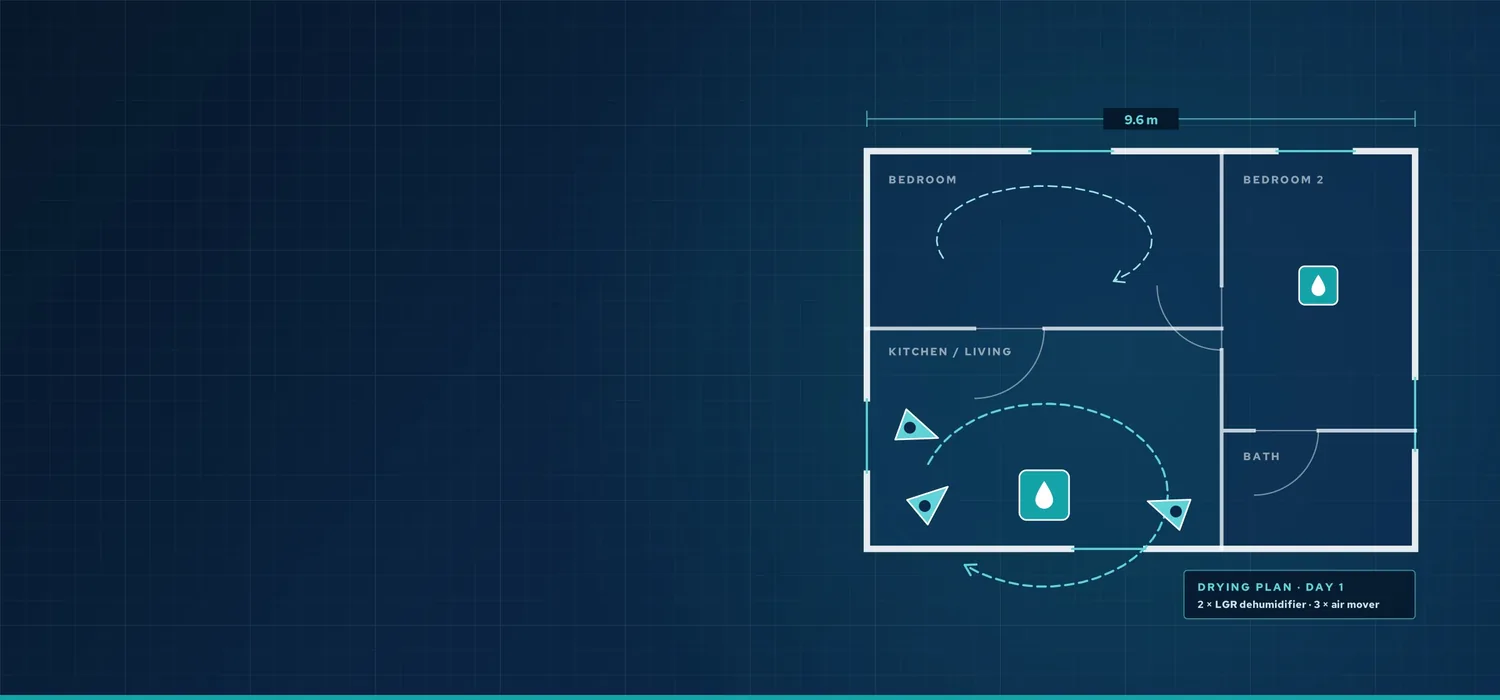
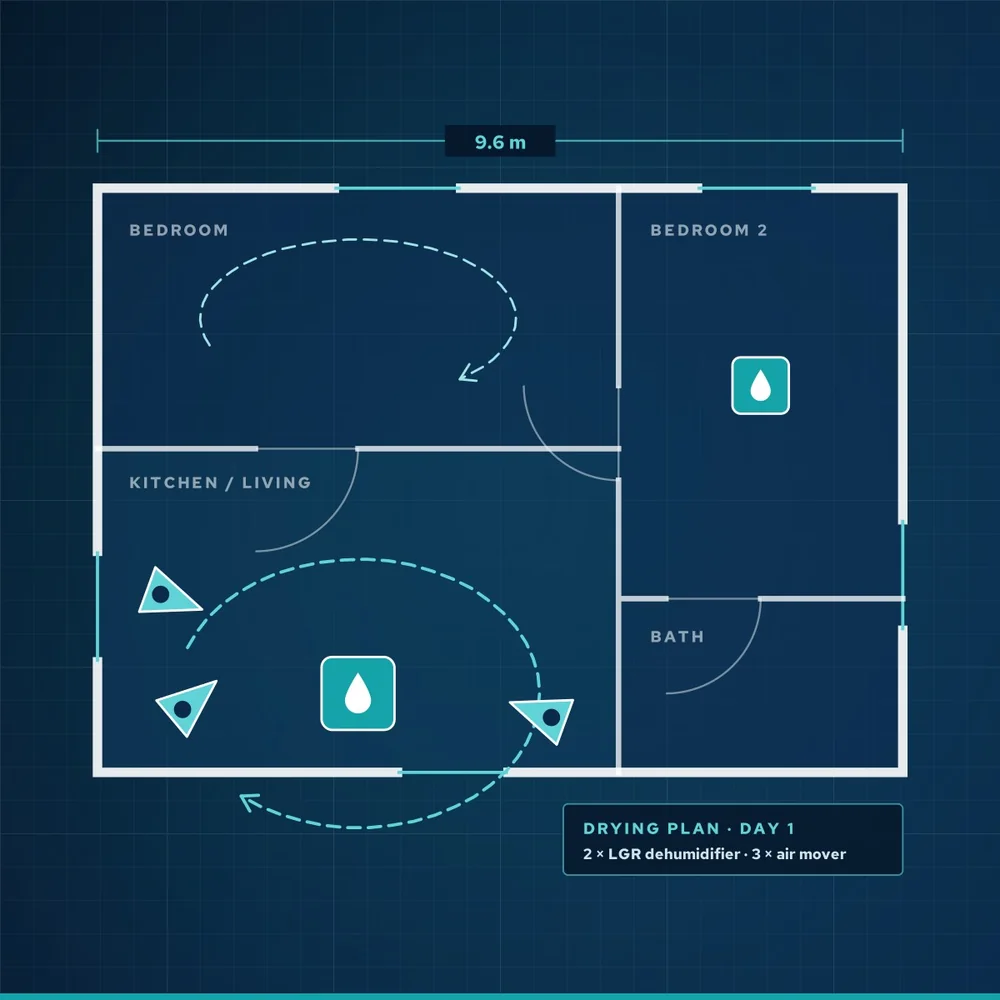
Using specialist equipment, we target drying where it is needed. Refrigerant and desiccant dehumidifiers reduce the humidity of the air, while air movers deliver dry air to wet materials and remove saturated air from damp areas. Programmes are set up for maximum drying progress with minimum disruption to the occupier.
From wet to proven dry.
Water removal
Where standing water remains after a burst pipe or flood, pumps remove it quickly and quietly to prevent further damage.
Moisture assessment
Moisture meters and thermal imaging show how far water has spread, identify the cause, and set the drying targets.
Structural drying
Dehumidifiers and air movers are installed to suit the building. Progress is monitored, charted and reported back, so everyone stays informed.
Mould treatment
Where mould has taken hold, we identify the cause and advise on or carry out remediation.
Reinstatement
Once the building is dry, we reinstate it, from rebuilding kitchens and bathrooms to decorating. See restoration services.
Talk to a drying specialist.
Free advice before you commit. Call us with the details and we will advise.